
IELTS Listening Part 2: Maps, Plans and the Turn You Missed
Part 2 is the one part of IELTS Listening where you mostly choose rather than write — and map labelling is where candidates lose a run of marks at once. Here is how the directions work.
Guides
What the descriptors actually ask for, what the screen does on the day, and the mistakes that cost bands. Written by the people who mark the papers.
Part 2 is the one part of IELTS Listening where you mostly choose rather than write — and map labelling is where candidates lose a run of marks at once. Here is how the directions work.
GT Reading has easier texts and a harder scale. The three sections, what each one holds, and the four band anchors ielts.org publishes for both modules side by side.
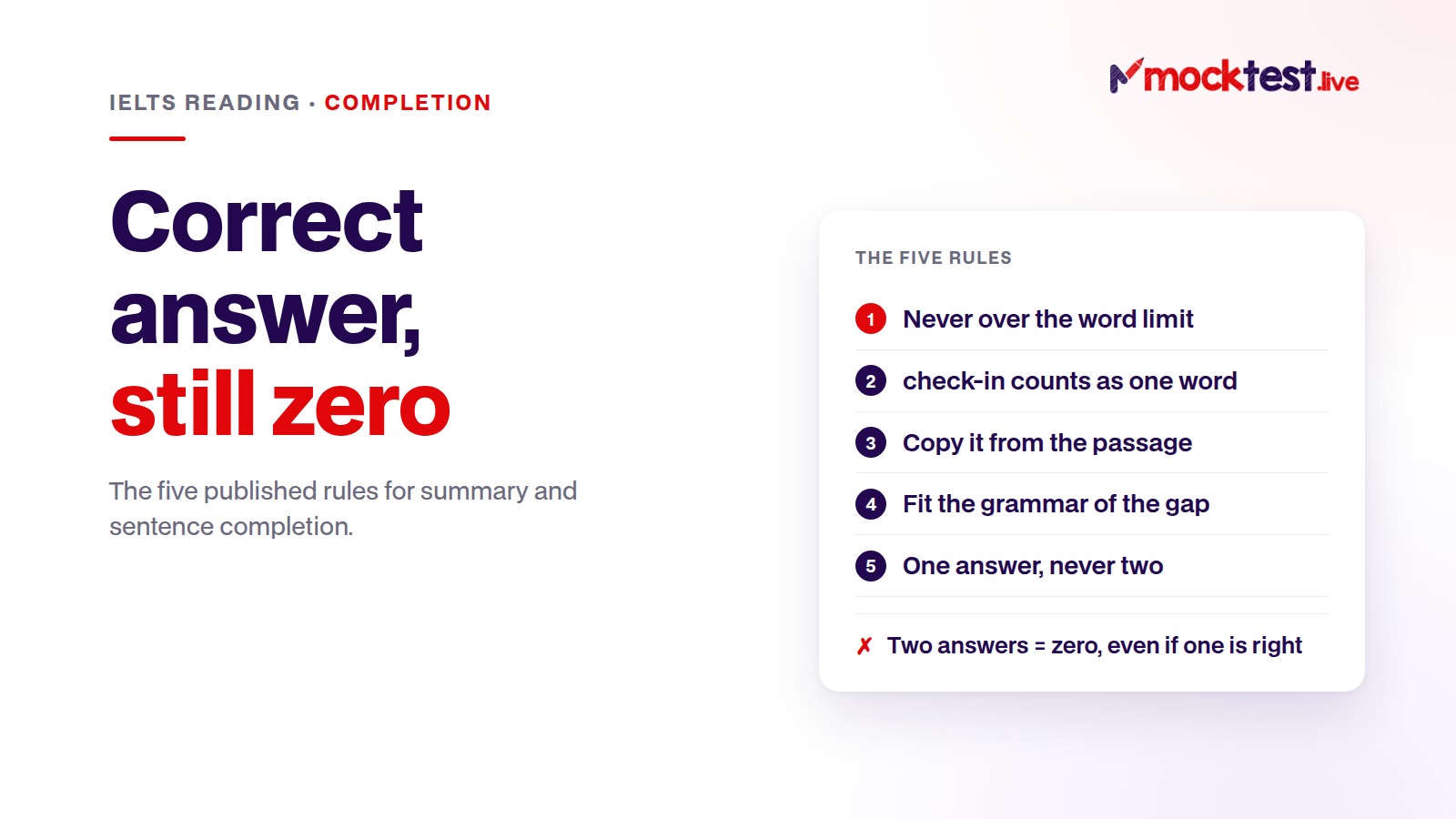
The word limit, what counts as one word, copying from the passage, grammar in the gap, and one answer per question. Five published rules that turn correct answers into zeros.
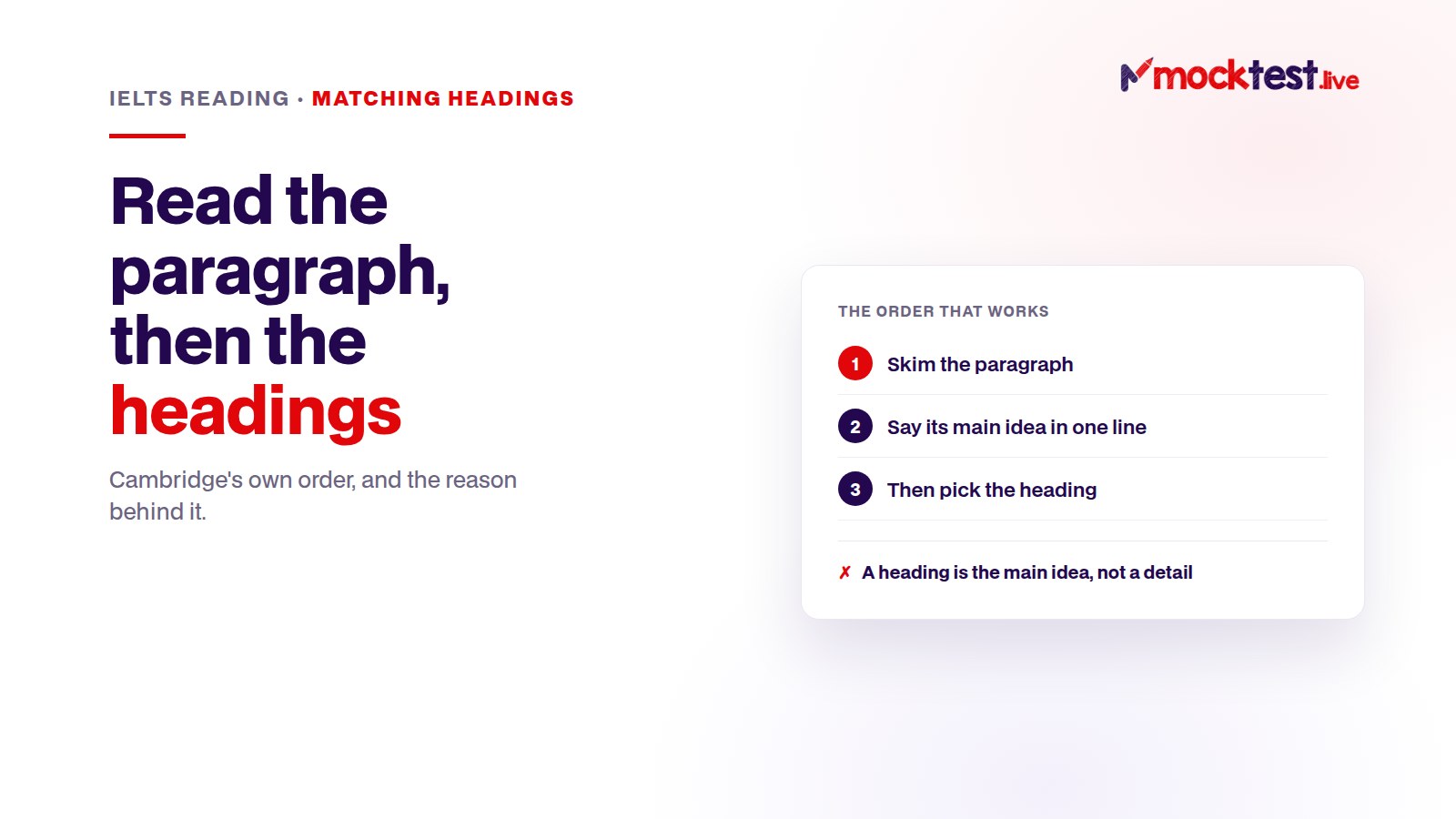
Cambridge says to skim the paragraph before you read the headings, and explains why the other order fails. The rules, where the main idea sits, and what to do when two headings both fit.
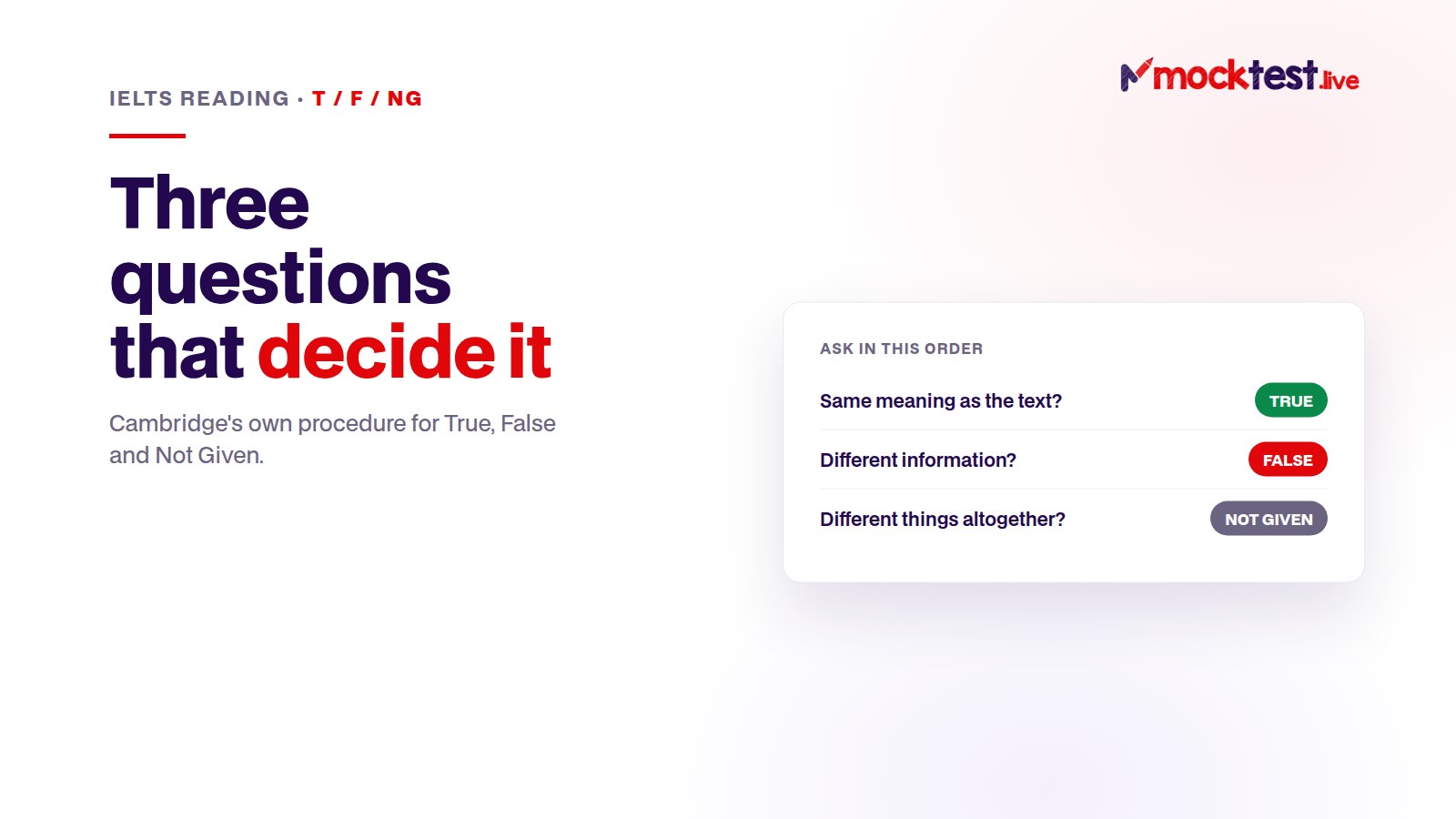
Cambridge's own decision procedure for True/False/Not Given, with its two worked items, the official definitions, and the three habits that cost most of the marks.
The IELTS Reading format for Academic and General Training: what each section holds, how the 40 marks work, and why the band charts online are not official.
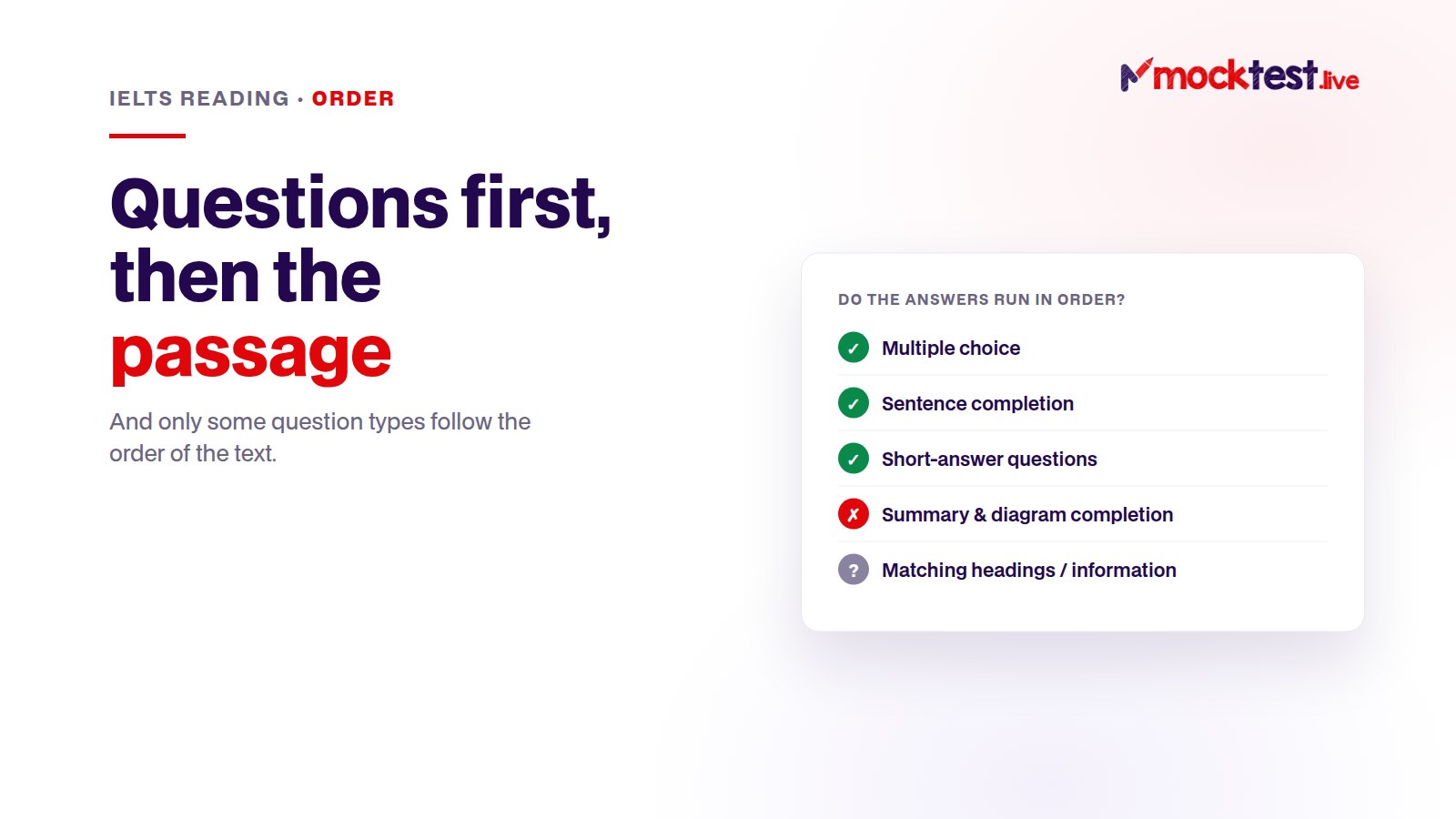
Cambridge and IDP both say to read the questions before the passage. And ielts.org names the four question types whose answers come in text order — the rest do not, officially.
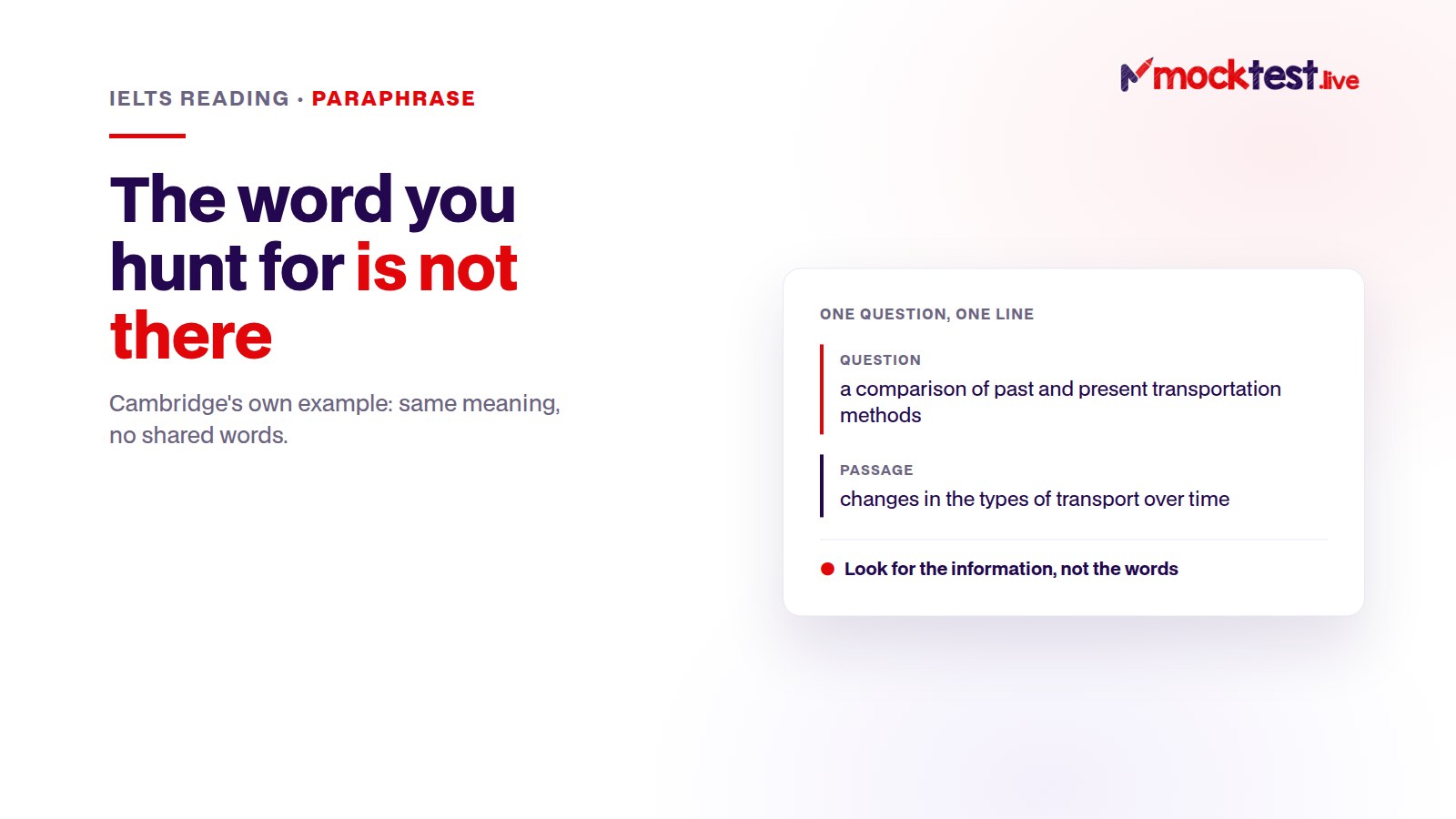
Why scanning for the exact words fails, with two paraphrase examples from Cambridge's own materials, the words that never change, and the drill that trains the skill in ten minutes a day.
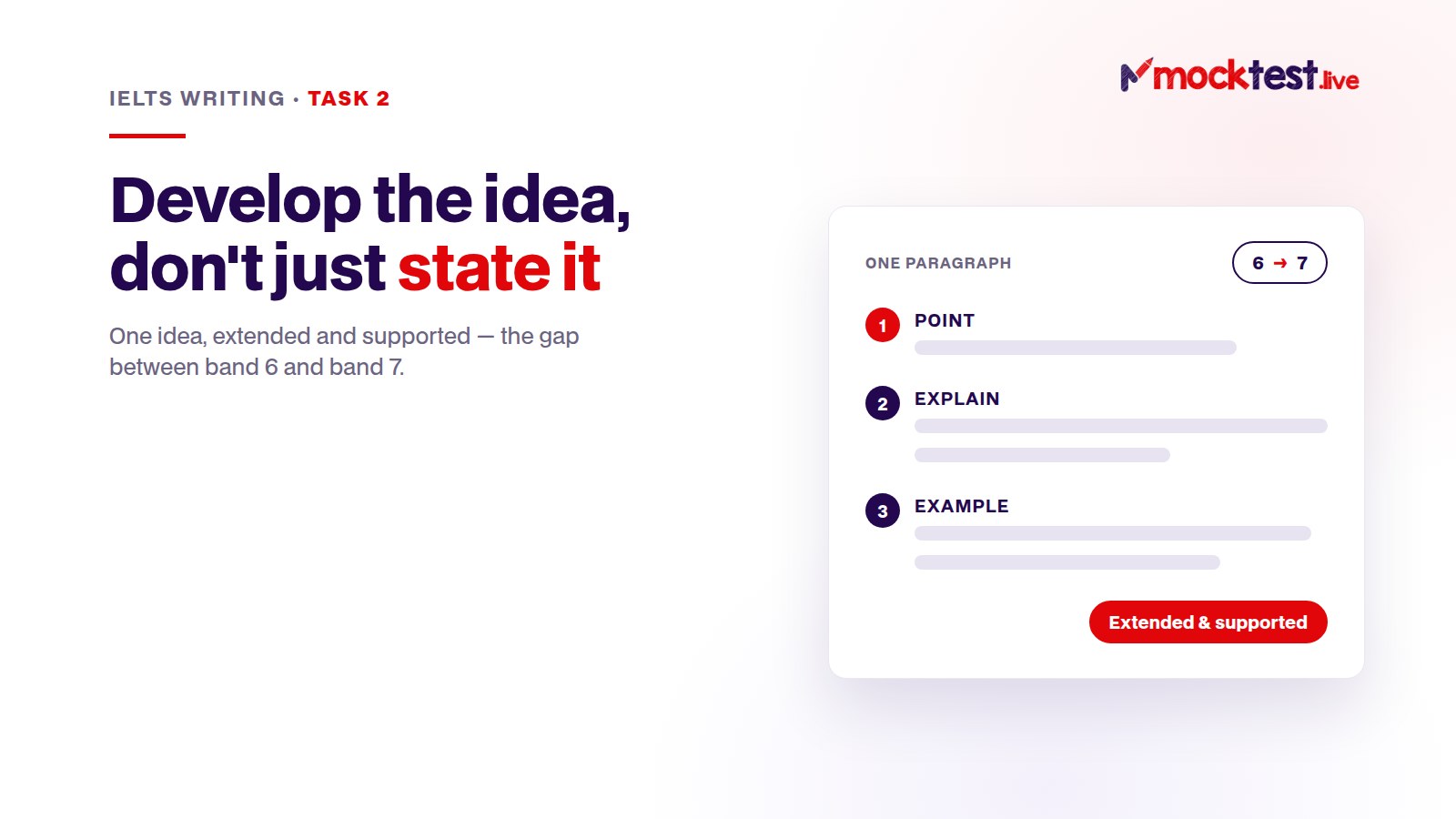
Band 6 says ideas may be insufficiently developed; band 7 says they are extended and supported. Point, Explain, Example — with the descriptor wording and a rewritten paragraph.