
In this guide7 sections
- Paper-based IELTS in Bangladesh: where this stands, verified 9 September 2026
- The room, end to end
- Listening: the ten minutes that became two
- Reading and Writing on a screen
- Writing on paper: can a Bangladeshi candidate count on it?
- Speaking is unchanged, and still face to face
- Change these five things this week
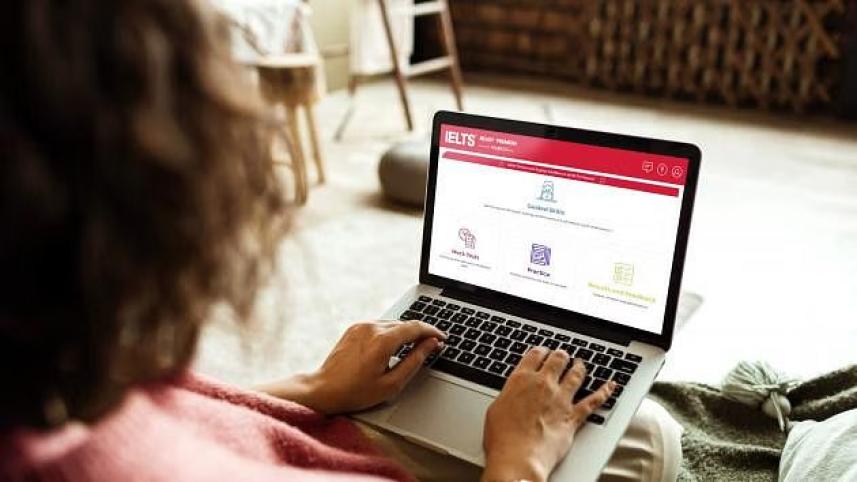
The booking pages at British Council Bangladesh and IDP don't show a paper option any more, and a fair amount of what's sitting in your prep folder was written for the test that button used to open.
Paper-based IELTS in Bangladesh: where this stands, verified 9 September 2026
IELTS on Paper stopped in Bangladesh after 31 January 2026. From 1 February, both partners here — British Council and IDP — have sold one standard test: IELTS on Computer, Academic and General Training alike. IELTS for UKVI held on a little longer in this market: its last paper sitting was 26 July 2026, and it has been computer-only since 27 July. Bangladesh moved ahead of most markets on the standard test, which is why advice written for candidates elsewhere may still assume you have a choice.
So, plainly: paper IELTS bondho. Not paused, not seasonal, not available in Sylhet but missing in Dhaka.
Thirty seconds to confirm it yourself, because you shouldn't take a blog's word about your own exam. Open the British Council Bangladesh IELTS booking page, or ielts.idp.com/bangladesh, choose your city, choose any month that still has seats, and look at what the format list offers you. There is one entry. If that ever changes, the booking page changes before any article does — this one included.
Results first. Paper took about 13 days. Computer-delivered results are published in days rather than a fortnight — the standard guidance is three to five, and the Bangladesh centres currently advertise faster than that. If you're working backwards from an intake deadline and wondering whether you could sit again, that gap is most of your answer.
| On paper (until 31 Jan 2026) | On computer (now) | |
|---|---|---|
| Listening | ~30 min of audio + 10 min transfer time | ~30 min of audio + about 2 min to check |
| Reading | 60 min, 40 questions, no transfer time | 60 min, 40 questions, no transfer time |
| Writing | 60 min, handwritten | 60 min, typed, running word count |
| Speaking | 11–14 min, human examiner | 11–14 min, human examiner |
| Results | about 13 days | days, not weeks |
The audio plays once in both columns. That never changed, and it's the reason the first row matters more than the rest.
The room, end to end
Headphones are on the desk when you sit down. ID and photo first, then the machine is unlocked for you. Listening runs, Reading follows it, Writing follows Reading — and there is no break anywhere in that sequence. You get up when the last submit button has been pressed, roughly two and a half hours after the first one started, and nobody stretches their legs in between.
Speaking is a separate appointment, before or after that session, in a quiet room with an examiner.
What's on the screen: a countdown in the corner that you can hide if it's making things worse, numbered boxes along the bottom for every question so you can jump, a review marker you can tick on anything you want to come back to, and a highlight-and-note tool. You're given paper and a pen for rough notes, and you hand them back on the way out.
None of the content moved. Four Listening parts, 40 questions. Three Reading passages, 40 questions. Two Writing tasks in 60 minutes, Task 1 at around 20 minutes and at least 150 words, Task 2 at around 40 minutes and at least 250. Same four marking criteria, same bands, no pass mark — the institution you're applying to sets the number, not IELTS.
Everything physical about how you work, though, has changed. And this is a country where the computer option arrived late and stayed the minority choice right up until it became the only one. Most of the coaching centres in Dhanmondi and Uttara, and most of the notes circulating in your batch group, were built by people who trained on paper.
Listening: the ten minutes that became two
On paper you wrote onto the question booklet and then had ten uninterrupted minutes at the end to copy 40 answers across to the answer sheet. Nobody called that thinking time, but that's what it was. You could park a question in Part 2 with a rough guess, fix a plural, work out whether "no more than two words" had been broken, and decide between two letters in a matching set — all after the audio had stopped.
That is gone. You type into the box next to the question as the recording plays, and when it ends you have about two minutes to look over what you've got. Enough to fill three empty boxes. Not enough to re-open a section.
The habit that replaces it is unglamorous: your first pass has to be the finished answer. Spelling right, plural right, inside the word limit. A Part 4 gap where you typed "environmental problem" when the speaker said "problems" used to be a transfer-time catch. Now it's a mark.
Two things I'd do differently from the standard advice. Don't use the on-screen note tool during Listening — it costs clicks you don't have; keep the pen and paper for the map and diagram sections and type everything else straight into the box. And build a two-minute end drill into every practice test you sit from now on: in those 120 seconds you check spelling, plurals and word count, and you do not re-litigate answers. Deciding between B and C with 40 seconds left is how people lose two that were already right.
Reading and Writing on a screen
The pen doesn't touch the passage now. To mark a sentence you select it, right-click, and choose highlight — and you can attach a note to it. It works. It's also a second or two slower than dragging a pen, every single time, and across three passages inside 60 minutes those seconds are not free. There's no search function either, which people assume there is. You can't hunt for a keyword the way you would in a PDF.
Scrolling costs you something subtler. On paper you remembered that an answer lived near the bottom of the second page, and that spatial memory was doing real work in Matching Information and True/False/Not Given. A scrolling pane doesn't give you that. Paragraph letters become the only landmark you have, which is an argument for actually using them.
"Read all the questions first, then read the passage" is weaker on screen than it was on paper. On paper the questions and the text were both in your field of view, and you could hold ten question stems loosely in your head while your eye moved. On screen the two panes scroll independently, so every glance back is a scroll and a re-find. For Matching Headings and True/False/Not Given I'd read one question, hunt it, answer it, move on — and only pre-read the whole set for question types that genuinely need it, like Matching Features where the same name recurs.
Writing is typed, with a live word count under the box. That's a real gift: nobody is counting words by hand in the last four minutes any more.
It also creates the problem I see most often.
The common worry is that typing will damage your Grammatical Range and Accuracy. For most candidates it doesn't. What it damages is Coherence and Cohesion. With a pen, a paragraph went forward once and stayed as written. On a screen you can drop a new sentence into the middle of a paragraph you finished four minutes ago, and people do it constantly, because it's so easy. The paragraph then reads like something with a graft in it — the referencing stops lining up, "this policy" points backwards at nothing in particular, and the progression an examiner is reading for turns into a loop. Band 7 wants "clear progression throughout"; band 6 is described as cohesion that "may be faulty or mechanical". Insert-editing is one of the shortest routes from the first to the second.
So write forward. Fix grammar at the end if you must, but don't reopen a paragraph's structure.
And plan inside the answer box, not on the rough paper. Type your Task 2 skeleton — position, two body ideas, the example you'll use — straight into the box, then delete it once the introduction is down. Your eyes stay on one surface, you build the essay where you'll write it, and the word count you're watching is honest again as soon as the plan is gone.
Writing is scored on four criteria, each carrying equal weight: Task Achievement (Task 1) or Task Response (Task 2), Coherence and Cohesion, Lexical Resource, and Grammatical Range and Accuracy. Nobody tells you which one you lost. That's the part worth asking a human about.
Writing on paper: can a Bangladeshi candidate count on it?
No. Not today.
The hybrid is real — IELTS on Computer with Writing on Paper, where Listening and Reading are on screen, the Writing questions appear on screen, and you handwrite your two answers on an official answer sheet. Same 60 minutes, same tasks, same criteria. It's being rolled out in selected markets. As of 9 September 2026, it isn't something you can book in Bangladesh; the format list at both partners here gives you IELTS on Computer.
We don't know when or whether it reaches Dhaka. No partner has published a market-by-market list, so anyone telling you it's coming in November is guessing, and so would I be.
Either way, prepare for typing. If the option appears at your centre and you can get a seat, take it — it's the same test and the scores are comparable. But building your last six weeks around a delivery mode that may not exist where you sit is a bad bet with no upside, and the typing is a skill you'll want anyway.
Speaking is unchanged, and still face to face
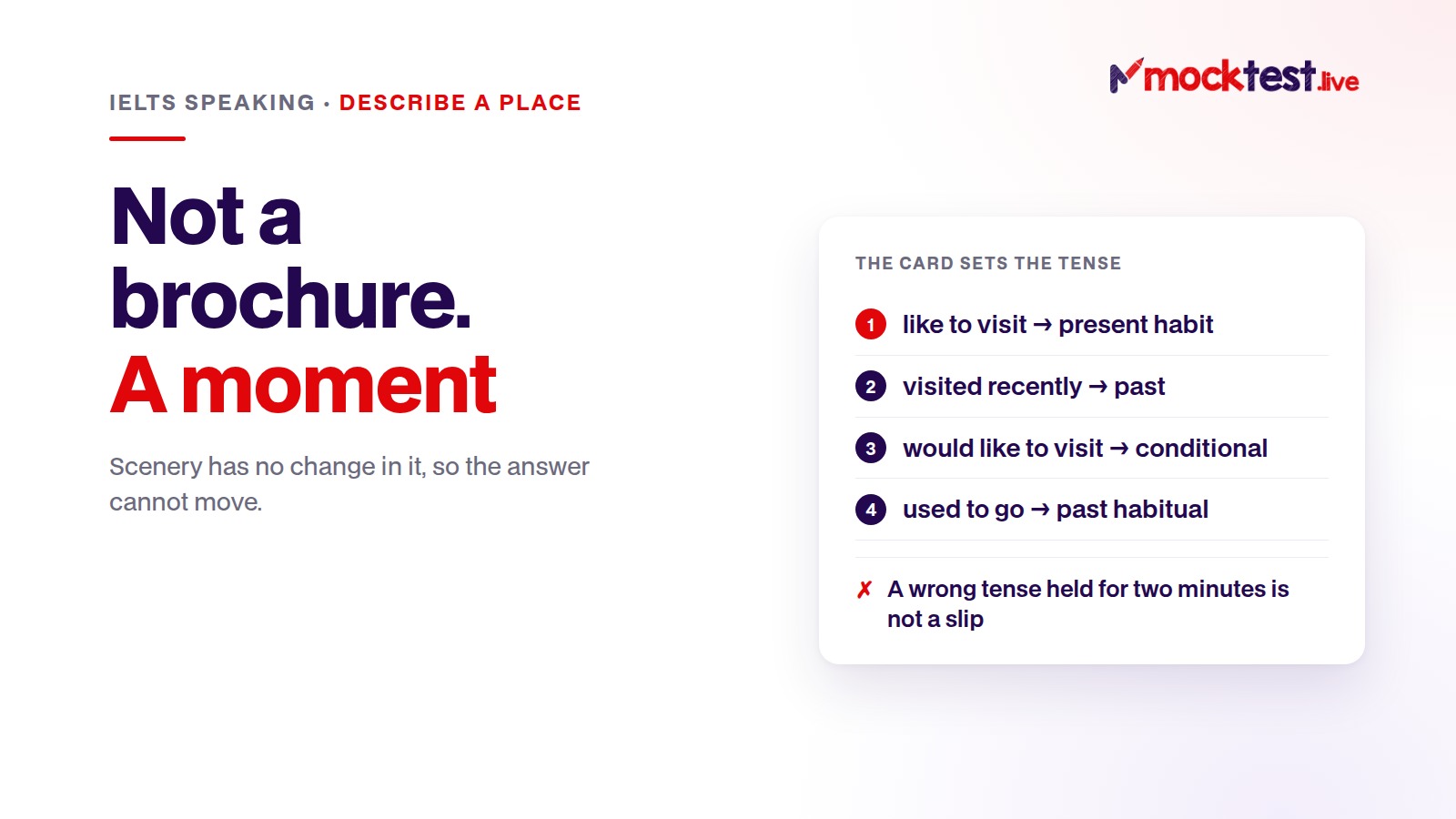
Eleven to fourteen minutes, three parts, face to face with a human examiner, before or after your computer session. Part 2 still gives you one minute with a card and a pencil, then one to two minutes of talking. Four criteria: Fluency and Coherence, Lexical Resource, Grammatical Range and Accuracy, and Pronunciation.
The format change touched none of it.
Mock Test's Cambridge papers do include Speaking: you record your answers to all three parts, and an instructor marks them on the four criteria with a line on each. Be clear about what that is. It shows you where your Speaking stands; it is not the thing you'll sit at the centre, where the examiner is in the room and follows up on what you said. No Speaking mock sold to you anywhere is.
For what it's worth, the Speaking marks Bangla speakers lose are fairly predictable: /v/ and /w/ collapsing into one sound so "vet" and "wet" arrive identically, /s/ and /ʃ/ swapping places, articles dropping out of otherwise fluent sentences, "advices" and "informations" as plurals, and "I have completed my HSC in 2022" where the past simple is required. That last one costs Grammatical Range and Accuracy in Writing too. None of it gets fixed by a screen — it needs a recording, a person, and repetition.
Change these five things this week
- Type every practice essay. Not most. Every one, in a plain box with no spellchecker, at the length the task demands. Handwritten practice is now training for an exam that doesn't exist here.
- Rewrite the end of your Listening routine. Two minutes, spelling and plurals and word limits only, no reopened answers. Practise the two minutes as deliberately as you practise Part 4.
- Stop annotating printouts. If your Reading practice involves a highlighter and a photocopy, you're rehearsing a motor skill you won't use. Do it with select-and-highlight, often enough to feel what it costs you.
- Write one Task 2 straight through, forward, with no going back into a finished paragraph. Then read it aloud and see whether the progression holds. This is the cheapest Coherence and Cohesion practice there is.
- Sit one full paper on a screen that looks like the real one, with a clock running and nothing paused.
That last one is the only item on the list an article can't do for you, and it's the one your nerves are actually about. Reading about a two-minute check is not the same as watching the audio stop and the timer start.
That's what this platform is: the computer-delivered IELTS screen rebuilt as closely as we could manage, down to the typeface, running in a browser with no app to install. Papers from Cambridge IELTS 1 to 21, Academic and General Training. Listening and Reading are marked the moment you submit, against the answer key, and converted using the published band descriptors — and because the Academic and General Training conversions genuinely differ, with GT needing more correct answers for the same band, you're scored on the right one rather than a single table pretending to cover both. Writing and Speaking go to a human instructor who marks all four criteria separately and writes a line on each. This won't help you if your real problem is hearing "thirteen" and "thirty" apart at speed — a replica screen doesn't fix ears. If you find a mistake in a paper, a person reads your report, and a correction re-marks everyone it affected.
Every Cambridge paper is free. Sit one on a weekday evening — and find out now which of your habits belonged to the old format.
Three things worth reading next, in the order most people need them: which of the two tests you actually need, since the conversion differs; what the Reading paper holds now, section by section; and what a mock costs in Bangladesh if you would rather sit one at a centre than at home.